Anion Gap Calculator for Metabolic Acidosis Assessment Analysis
What’s the Anion Gap?
The anion gap is a derived number used to assess acid-base balance and recognize certain kinds of electrolyte imbalance. It comes from a routine serum chemistry panel and weighs measured positively charged ions with measured negative ions in the blood. In everyday use, it assists clinicians spot a hidden metabolic derangement that may not be clear from symptoms alone.
The classic calculation uses serum sodium, serum chloride, and serum bicarbonate. These electrolytes are part of the body’s buffering system, which helps maintain stable pH. When the balance shifts, the anion gap can elevate or remain normal depending on the underlying cause of the problem.
One reason the anion gap is useful is that it acts as a diagnostic clue during a medical evaluation. A changed gap can point toward a specific acid-base disorder, especially metabolic acidosis. It is not a diagnosis by itself, but it can refine the differential diagnosis and guide follow-up testing.
The normal reference range varies somewhat by laboratory because of differences in measurement methods and reporting. That is why the lab’s own result range matters more than a single universal number. Still, the basic concept remains the same: the anion gap reflects the difference between measured ions and can reveal an anion deficit or an excess of unmeasured acids.
How the Anion Gap Calculator Works
An anion gap calculator is a quick clinical utility that applies the standard formula to readings entered from a serum chemistry panel. Many calculators use sodium, chloride, and bicarbonate. Others also include potassium, depending on the formula being used and the institution’s preference.
The standard formula is:
Anion gap = sodium - (chloride + bicarbonate)
When potassium is included, the formula becomes:
Anion gap = sodium + potassium - (chloride + bicarbonate)
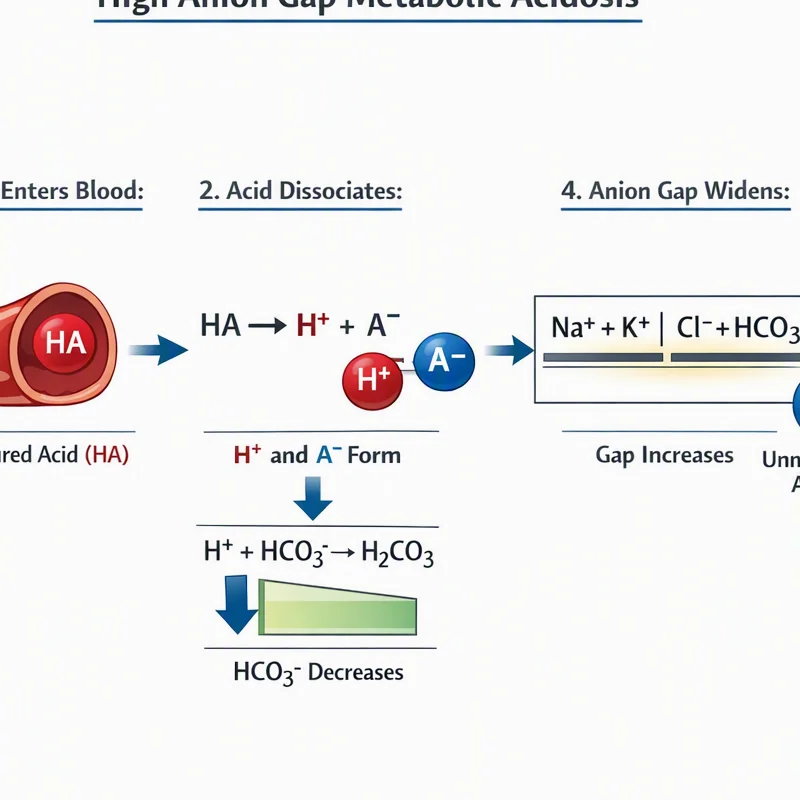
The calculator produces a calculated value that helps assess whether an acid load is present. In clinical use, this is more than just a math exercise. It is a screening tool that can indicate whether a patient may have metabolic acidosis and whether the pattern suggests a elevated-gap or normal-gap process.
Because the result is influenced by measurement technique and lab-specific calibration, the calculator should always be interpreted in context with the rest of the laboratory result. It works best as part of a broader clinical interpretation rather than as a isolated number.
For example, low bicarbonate with a high gap suggests accumulation of unmeasured acids. Low bicarbonate with a normal gap often suggests a loss of bicarbonate rather than acid accumulation. That distinction is key to understanding the test.
Anion Gap Metabolic Acidosis: What the Result Signifies
Metabolic acidosis means the blood has turned more acidotic because bicarbonate has decreased, acid has increased, or both. The anion gap helps classify the problem into high anion gap metabolic acidosis or normal anion gap metabolic acidosis. This classification offers an important diagnostic hint about the likely mechanism.
A high anion gap usually indicates the presence of unmeasured acids. These acids consume bicarbonate during buffering, which widens the gap. This pattern often points to problems such as lactic acid buildup, ketone production, kidney dysfunction, or ingestion of certain toxins.
A normal anion gap result does not mean the patient is normal. It usually means bicarbonate has been lost and chloride has risen to maintain electrical neutrality, producing a pattern often called hyperchloremic acidosis. This is a different type of acid-base disturbance and requires a different thought process.
Recognizing the pattern matters because the treatment depends on the cause. A patient with high-gap acidosis may need urgent assessment for sepsis, hypoperfusion, diabetes, or toxin exposure. A patient with normal-gap acidosis may need evaluation for gastrointestinal losses, renal tubular defects, or medication effects.
In short, the anion gap is a practical way to identify the biochemical signature of acid-base balance disturbances. It helps clinicians move from a general finding of metabolic acidosis to a more focused investigation of the underlying cause.
How to Work Out the Anion Gap Step-by-Step
Finding the anion gap is straightforward when you have the main electrolyte values. The standard method use sodium, chloride, and bicarbonate, with optional inclusion of potassium.
- Step 1: Obtain the serum electrolyte values from the lab report.
- Next step: Check the values for serum sodium, serum chloride, and serum bicarbonate.
- Next: Sum chloride and bicarbonate together.
- Last: Take away that sum from sodium.
Using the basic formula:
Anion gap = sodium - (chloride + bicarbonate)
If the calculator includes potassium, incorporate it to the sodium value before subtracting the other electrolytes. Potassium is usually a minor component of the formula, but it can a bit change the result.
For example, if sodium is 140, chloride is 102, and bicarbonate is 22, the calculation is 140 - (102 + 22) = 16. If potassium is included and is 4, the calculation becomes 140 + 4 - (102 + 22) = 20.
That number is then checked with the lab’s reference range. Some labs consider a greater range normal, while others use a reduced one. The key is to read the result using the specific reference range attached to the patient’s lab system.
Even when the arithmetic is basic, the meaning is not. The calculated result should always be assessed in the setting of the patient’s symptoms, other test results, and overall clinical interpretation.
Adjusted Anion Gap and Adjustment for Albumin
Albumin has a major effect on the anion gap because it is one of the main unmeasured anions in blood. When albumin is low, the measured anion gap high AG etiologies may look deceptively normal even when a clinically significant acidosis is present. This is why the corrected anion gap is important.
Hypoalbuminemia decreases the baseline gap by diminishing the amount of unmeasured negative charge in the plasma. In patients with low albumin, failing to adjust can obscure a high-gap process. The correction helps restore a more accurate estimate of the true acid burden.
A commonly used corrected formula applies a small amount to the measured anion gap for every decrease in albumin below the normal range. The exact adjustment may change by institution, but the principle is the same: low albumin means the observed value may minimize the actual disturbance.
This is why the corrected value is often more clinically meaningful than the raw number. A patient with an apparently normal laboratory result range may still have an elevated corrected gap if albumin is reduced. That can change the interpretation from normal to concerning for hidden high-gap metabolic acidosis.
Albumin adjustment is especially important when the clinical picture indicates serious illness but the uncorrected anion gap does not match. In that setting, the corrected anion gap can reveal an important metabolic problem and enhance the quality of the diagnostic workup.
Typical Causes of High Anion Gap Metabolic Acidosis
High anion gap metabolic acidosis develops when acids collect in the body at a faster rate than they can be cleared. The excess acids deplete bicarbonate and increase the gap. The leading causes include lactic acidosis, ketoacidosis, renal failure, and toxic alcohol ingestion.
Lactic acidosis develops when oxygen delivery or utilization is compromised, leading to lactate elevation. This can happen in shock, severe infection, hypoxia, seizures, or tissue ischemia. Lactate is an useful clue because it often signals a major underlying cause that needs urgent treatment.
Ketoacidosis is often related to uncontrolled diabetes, starvation, or alcohol use. In this situation, ketone accumulation adds to the acid load. The resulting metabolic derangement may present with nausea, vomiting, abdominal pain, dehydration, or altered mental status.
Renal failure can also lead to a high gap because the kidneys cannot remove acids effectively. As acid builds up, the anion gap rises and bicarbonate falls. This pattern may appear over time in chronic kidney disease or more abruptly in acute kidney injury.
Toxic alcohol ingestion is another important cause, especially when the presentation is severe or unexplained. Certain ingestions generate acids that increase the gap and can cause dangerous neurologic, metabolic, and visual complications. When the history is uncertain, the anion gap may become an first warning sign.
These conditions are part of the main differential diagnosis for a high-gap result. The calculator does not identify which one is present, but it helps inform the next tests and the urgency of care.
Common Sources of Normal Anion Gap Metabolic Acidosis
Normal anion gap metabolic acidosis develops when bicarbonate is lost and replaced by chloride, keeping the overall gap within the reference range. This is often called hyperchloremic acidosis because chloride elevates as bicarbonate falls.
A frequent cause is diarrhea, which results in direct gastrointestinal bicarbonate loss. The body reacts by retaining chloride, and the result is a low bicarbonate state with a normal gap. This pattern is often noted in volume depletion as well.
Renal tubular acidosis is another major cause. In this condition, the kidneys fail to acidify urine or conserve bicarbonate appropriately. The result is an acid-base disorder that can persist despite a seemingly ordinary anion gap.
Other causes of normal-gap acidosis may involve medication effects, urinary diversion, or certain kidney disorders, but the major teaching point is simple: the presence of acidosis does not always mean the gap is elevated.
In normal-gap states, the chemistry often shows a chloride shift as bicarbonate declines and chloride goes up. This compensation preserves electrical neutrality but indicates a real metabolic problem that still needs a cause-specific evaluation.
Medical Interpretation and Further Steps
Evaluating the anion gap is most useful when considered alongside the rest of the patient’s data. If the result suggests metabolic acidosis, the next step is usually a focused diagnostic workup. This evaluation may include an ABG, lactate level, ketone levels, kidney function testing, and sometimes toxin screening.
An ABG sample assists determine the pH and respiratory compensation. Serum lactate is useful when lactic acidosis is considered. Ketones aid assess for diabetic or starvation-related ketoacidosis. Kidney studies assist determine whether reduced acid excretion is contributing to the disorder.
The gap reading also helps determine the level of urgency. A very high value can suggest a potentially hazardous metabolism-related condition that requires quick medical attention. A standard gap paired with low bicarbonate may suggest a different pathway, including loss through the gastrointestinal tract or renal tubular dysfunction.
Medical assessment should also consider signs such as breathlessness, mental confusion, fluid loss, vomiting, belly pain, or evidence of an infection. The test result is only one element of the overall picture, but it can be a crucial diagnostic clue that helps determine the following step in care.
For that reason, the anion gap calculator is most appropriately seen as a screening aid that assists, rather than takes the place of, medical reasoning. It helps organize the differential diagnosis and focus the evaluation efficiently.
Limitations of an Anion Gap Calculator
An anion gap calculator is valuable, but it has major restrictions. The first is variability in lab results. Various analyzers, measurement methods, and reference intervals can generate mildly different results. This means the same patient may end up in different result categories depending on where the test was processed.
The other restriction is the albumin-related effect. When not corrected, a reduced albumin level can conceal a real high gap. This is one reason the anion gap correction is so important in people with reduced albumin or serious illness.
Another issue is that the gap does not measure all of every relevant ion. Shifts in unmeasured cations, including ionized calcium, may affect interpretation in certain situations. The calculator also does not determine whether the acidosis is acute or chronic, nor does it indicate the exact underlying cause.
Most importantly, the number must be interpreted in clinical context. Symptoms, history, medications, kidney function, and other lab results all affect the meaning of the calculation. A normal value does not exclude disease, and an elevated value does not prove one specific diagnosis.
When used properly, the calculator is a helpful clue. When used by itself, it can be misleading. That is why it should always assist broader medical evaluation rather than replace it.
Frequently Asked Questions
What is an anion gap calculator used for?
An anion gap calculator is used to calculate the gap from serum electrolytes and help assess metabolic acidosis. It acts as a screening tool for an acid-base disorder and can point toward a high-gap or normal-gap pattern. Clinicians use it to aid clinical interpretation and inform the next diagnostic steps.
How do you calculate the anion gap in metabolic acidosis?
The usual formula is sodium - (chloride + bicarbonate). Some versions also include potassium. The calculation uses values from the serum chemistry panel and produces a calculated value that is compared with the lab’s reference range.
What does a high anion gap mean?
A high gap usually means there are extra unmeasured acids in the blood. Common causes include lactic acidosis, ketoacidosis, renal failure, and toxic alcohol ingestion. It suggests a high anion gap metabolic acidosis and usually warrants a focused diagnostic workup.
Why do you correct the anion gap for albumin?
You correct it because albumin strongly affects the measured gap. With hypoalbuminemia, the uncorrected result may look normal even when a true metabolic acid load is present. The corrected anion gap gives a more accurate picture of acid-base balance and helps avoid missed diagnoses.
Which conditions can cause a normal anion gap metabolic acidosis?
Frequent causes include diarrhea, tubular kidney acidosis, and additional problems that result in loss of bicarbonate with a compensatory increase in chloride, often referred to as hyperchloremic metabolic acidosis. While the gap is normal, the patient still has a true metabolic acidosis that needs evaluation.