Anion Gap Calculator in mmol/L: Formula, Range, and Meaning
What the Anion Gap Measures
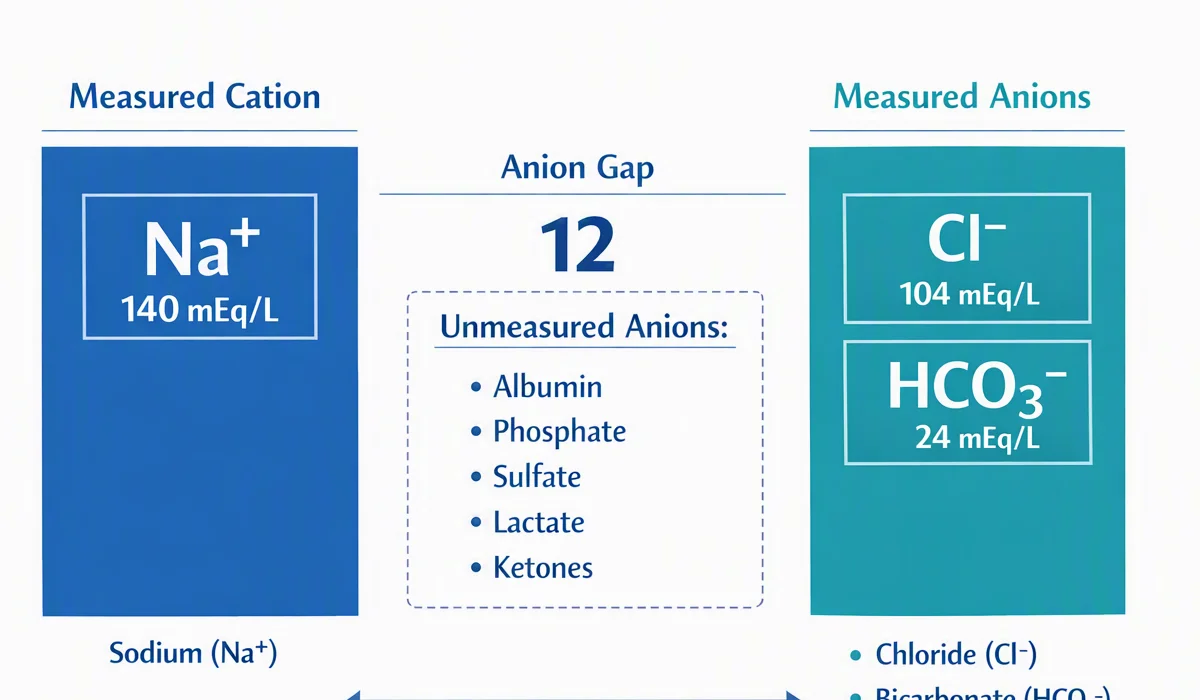
The anion gap is a useful picture of electrolytes in blood chemistry. It is used to compare the main positively charged particles, such as sodium, with the primary negatively charged particles, especially chloride and bicarbonate. Because usual lab tests do not measure every charged substance in the blood, the anion gap estimates the amount of unmeasured anions that are present.
This makes the anion gap a helpful diagnostic clue in an electrolyte panel. Clinicians use it to help assess acid-base balance, spot patterns of metabolic acidosis, and interpret a lab result in context. A single number does not tell the whole story, but it often helps guide the next step in evaluation.
The concept is especially useful because changes in the sodium level, chloride level, and serum bicarbonate can reveal whether the body is compensating for an underlying acid-base disorder. In many cases, the anion gap is one of the first values reviewed on a blood chemistry panel.
Using an Anion Gap Calculator
An anion gap calculator is designed to calculate anion gap from commonly reported lab values. Most online calculators ask for sodium, chloride, and bicarbonate, usually taken from a basic metabolic panel or a serum chemistry panel. The result helps estimate whether the gap is within the normal range, high, or below normal.
The classic anion gap formula is:
Anion gap = sodium - (chloride + bicarbonate)
When lab values are entered in millimoles per liter, the calculator returns the result in mmol/L. Certain laboratories report the same components in mEq/L, which is commonly used in clinical practice. For most routine electrolyte values, the numeric result in mmol/L and mEq/L is the same, but the units should still be read carefully.
To use the calculator correctly:
- Find the most recent sodium, chloride, and bicarbonate values.
- Confirm whether the results are in mmol/L or mEq/L.
- Type in the values exactly as reported on the lab report.
- Consider the interpretation alongside the laboratory reference range.
The calculator is most useful as a rapid interpretation tool, not as a diagnosis by itself. It can highlight patterns that indicate a need for further review of the metabolic panel or clinical condition.
Anion Gap Formula and Units Explained
The anion gap is usually reported in mmol/L or mEq/L. These two units are commonly used in clinical practice, but the distinction matters when reviewing lab reports or using an anion gap calculator. For many electrolytes, mmol/L and mEq/L are numerically equivalent because the ions involved carry a single charge. Still, it is best to check the unit shown on the report.
The underlying concept behind the anion gap formula is that measured cations and measured anions do not account for everything in the blood. The difference reflects unmeasured anions, including proteins and organic acids. These unmeasured substances help clarify why a gap exists at all.
Serum albumin is especially important because it is a major negatively charged protein in the bloodstream. Lower albumin reduces the anion gap, even when acid-base status is otherwise unchanged. That is why interpretation often requires attention to the patient’s albumin level and the broader clinical picture.
In practical terms, the calculator helps turn raw blood chemistry into meaningful interpretation. The value is not just arithmetic; it is a clue about what is happening in acid-base balance and whether a corrected value might be more accurate.
Typical Anion Gap Range
The normal anion gap depends on the testing method and the reference range set by that laboratory. Multiple measurement techniques, analyzers, and reporting conventions can shift the expected result slightly. That is why clinicians should always compare the number with the specific laboratory values shown on the report rather than relying on one universal cutoff.
In many settings, a typical anion gap is somewhere in a mid-teen range when measured without adjustment, but the exact interpretation should follow the lab’s stated range. If the result falls outside that range, the next question is whether the pattern indicates a true physiologic change or a laboratory artifact.
The albumin-corrected anion gap can be valuable when serum albumin is low. Since albumin contributes significantly to the usual gap, correcting for it may reveal a hidden increase that would otherwise be missed. This correction improves clinical interpretation, especially in hospitalized patients or anyone with poor nutrition, inflammation, or chronic disease.
In short, a “normal” number is only normal within its context. The best interpretation comes from combining the lab reference range, albumin status, and the rest of the metabolic panel.
Elevated Anion Gap Causes
An high anion gap frequently suggests metabolic acidosis, notably when bicarbonate is reduced and acid is accumulating in the body. In this setting, the gap increases because extra acids contribute unmeasured anions that are not directly included in the routine electrolyte measurements.
Frequent causes include:
- Lactic acidosis, which can occur when the body produces or clears lactate improperly.
- Ketoacidosis, seen when ketone production rises and contributes to acid buildup.
- Renal failure, where the kidneys cannot remove acids effectively.
Each of these conditions can alter acid-base balance in a unique way, but the pattern may look similar on an electrolyte panel. A high gap is therefore a valuable diagnostic clue, not a final diagnosis. Additional blood chemistry testing, history, and physical findings are usually needed to determine the cause.
In practice, the anion gap is often interpreted alongside serum bicarbonate and chloride level to help distinguish high-gap metabolic acidosis from other acid-base disorders. The result matters because the treatment approach depends on the underlying condition rather than the number alone.
Low Anion Gap Reasons
A reduced anion gap is uncommon, but it can still be medically significant. One of the most typical explanations is hypoalbuminemia, since lower serum albumin decreases the amount of negatively charged protein in the blood. If albumin is low, the anion gap may appear reduced even if the patient does not have a underlying acid-base issue.
Other potential causes include multiple myeloma, where abnormal proteins can affect blood chemistry, and lithium toxicity, which can influence measured charges in the serum. A https://jsbin.com/japemeloje low value may also reflect lab error or sample issues, so repeating the test may be appropriate when the result does not match the clinical picture.

Because a low anion gap is often ignored, it should not be ruled out without thought. It may be the first hint of an protein abnormality, medication effect, or a testing problem. Examining the full metabolic panel and checking the albumin level can help explain the meaning of the result.
When a low value appears unexpectedly, the best next step is usually careful interpretation rather than assumption. In some cases, the number is accurate and important; in others, it is a clue that the sample or measurement needs retesting.
How Albumin Alters the Anion Gap
Blood albumin has a significant influence on the anion gap because it bears a negative charge and adds to the normal balance of ions in the blood. When albumin drops, the measured gap often falls as well, even if the patient’s overall acid-base balance has not shifted significantly. This is why albumin must be factored in when interpreting results.
The correction formula modifies the observed value to approximate what the anion gap would be at a normal albumin level. Different calculators may use slightly different correction approaches, but the goal is the same: yield a corrected value that better reflects the true acid-base picture.
This matters because low albumin can conceal a high-gap process. For example, a patient with metabolic acidosis may seem to have a near-normal result if the uncorrected value is used alone. With correction, the elevated gap may become more clear, improving clinical significance and interpretation.
Albumin also mirrors broader physiology, including nutrition, inflammation, liver function, and illness severity. So a change in albumin level can affect both the number and the meaning of the result. That is why the anion gap is best read as part of the full metabolic panel rather than in isolation.
When It’s Time for Medical Evaluation
A high or low anion gap does not always mean an emergency, but it should be reviewed in the context of symptoms and the rest of the blood test results. If there are signs of illness along with an unexpected result, medical evaluation is appropriate. Symptoms may include fatigue, confusion, difficulty breathing, nausea and vomiting, or dehydration, depending on the underlying cause.
Timely evaluation is especially important when an acid-base disorder is suspected or when the lab pattern suggests an electrolyte imbalance. A high anion gap may point to a serious metabolic problem such as lactic acidosis, ketoacidosis, or renal failure. A low result may suggest hypoalbuminemia, medication effect, or a protein disorder that needs follow-up.
If you are checking blood test results and the value is unexpected, a clinician can help interpret the findings in context. They may repeat the test, review the serum chemistry panel, check albumin, and look for the underlying cause of the abnormality. The key is to interpret the lab result with the full clinical picture, not the number alone.
FAQ About the Anion Gap Calculator
What is an anion gap calculator used for?
An anion gap calculator is used to determine the anion gap from routine blood chemistry values, usually sodium, chloride, and bicarbonate. It helps identify whether the result is in the normal range, high, or low, which can be a useful diagnostic clue in acid-base evaluation. It is especially helpful when checking a metabolic panel or electrolyte panel quickly.
How do you calculate anion gap in mmol/L?
To calculate anion gap in mmol/L, use the standard formula: sodium minus the sum of chloride and bicarbonate. In other words, anion gap = sodium - (chloride + bicarbonate). If the lab reports the same electrolytes in mEq/L, the numeric value is often the same for these ions, but always confirm the unit shown on the report.
What is the normal anion gap range?
The usual range depends on the laboratory reference range and the assay used used by that lab. There is no single standard cutoff that applies to every report. Always check the result with the specific laboratory values listed on the blood test report and see if an albumin-corrected anion gap is needed for interpretation.
What does a high anion gap mean?
A raised anion gap often indicates acidosis caused by extra acids in the body. Common patterns include lactate acidosis, ketone-related acidosis, and kidney failure. The result is important, but it should be read alongside bicarbonate, chloride, symptoms, and the overall acid-base balance.
Can low albumin change the anion gap result?
Yes. Low albumin levels can lower the measured anion gap and may make the result look closer to normal than it really is. That is why an albumin-corrected anion gap can be useful. It provides a better corrected value for interpretation when hypoalbuminemia is present.